
Randolph County Superior Court Overview
North Carolina's court system is a unified state Judicial Branch. Randolph County is listed by the NC Judicial Branch as Prosecutorial District 37, Superior Court District 37, and District Court District 37. Superior Court is the state's general jurisdiction trial division. It handles felony criminal cases, civil cases involving more than $25,000, and appeals from District Court misdemeanor and infraction matters. Superior Court judges are elected to eight-year terms and rotate among districts.
The main Randolph County court location is the Randolph County Courthouse at 176 East Salisbury Street in Asheboro. The courthouse main phone is (336) 328-3000. The Superior Court judge contact listed in the county court table is (336) 328-3191. The Clerk of Superior Court, in Suite 201, maintains court records, filings, estates, copies, and costs for local court cases. Visitors should remember that the courthouse has a strict no-device rule covering cell phones, computers, multimedia devices, and cameras.
Randolph County Superior Court Table
Randolph County does not have a list of separate numbered Superior Courts like some states. The official local court table identifies the courthouse, clerk, Superior Court judge, District Court judges, District Attorney, magistrate contacts, and related court programs. This table uses the official roles and phone numbers found in the Randolph County research rather than inventing numbered courts.
| Court or Office | Type | Address | Phone |
|---|---|---|---|
| Randolph County Courthouse | Main Superior and District Court location | 176 East Salisbury Street, Asheboro, NC 27203 | (336) 328-3000 |
| Clerk of Superior Court | Records, filings, estates, copies, and costs | 176 East Salisbury Street, Suite 201, Asheboro, NC 27203 | (336) 328-3100 |
| Superior Court Judge | Superior Court matters | Randolph County Courthouse | (336) 328-3191 |
| District Court Judges | District Court matters | Randolph County Courthouse | (336) 328-3270 |
| District Attorney | Prosecution in District 37 | Randolph County Courthouse area | (336) 328-3010 |
| Magistrate, courthouse | Magistrate functions | Randolph County Courthouse | (336) 328-3011 |
| Magistrate, jail | Jail magistrate contact | Randolph County Detention Center area | (336) 629-4411 |
| Archdale Magistrate's Office | Magistrate and small-claims assistance | Archdale area | (336) 328-3141 |
Superior Court vs District Court vs Magistrate
Randolph County court users often see all three levels in one courthouse workflow. Superior Court is the primary trial court name in the state court structure map, but District Court and magistrates handle many high-volume matters. District Court covers misdemeanors, infractions, many traffic cases, small claims appeals, juvenile matters, domestic cases, and lower-value civil matters. Magistrates handle initial criminal processes, warrants, first appearances or bond-related functions within authority, small-claims functions, and certain civil ceremonies.
| Point | Superior Court | District Court | Magistrate |
|---|---|---|---|
| Civil cases | Generally more than $25,000 | Lower-value civil matters and many domestic matters | Small claims functions within statutory authority |
| Criminal cases | Felonies and appeals from District Court misdemeanor or infraction matters | Misdemeanors, infractions, criminal traffic, and first-level proceedings | Warrants, initial processes, first appearances, and bond-related functions as allowed |
| Family and juvenile | Limited by case type and appeals | Domestic relations and juvenile matters | Not the main forum for family case adjudication |
| Records office | Clerk of Superior Court | Clerk of Superior Court | Clerk records and magistrate contacts through the court directory |
| Local district label | Superior Court District 37 | District Court District 37 | Courthouse, jail, and Archdale magistrate contacts |
Randolph County Superior Court Case Flow
Case flow depends on the case type. A felony may begin with an arrest, warrant, summons, or other charging process before moving through early District Court stages and then into Superior Court by indictment or other proper procedure. Civil matters may begin with a complaint and filing fee, then continue through service, answer, motions, discovery, mediation or scheduling, hearing, trial, judgment, and possible appeal. District Court misdemeanor and infraction appeals can move upward to Superior Court.
Criminal flow: Arrest or process › Magistrate or first appearance › District Court stage › Indictment or transfer to Superior Court › Arraignment › Pretrial hearings › Plea or trial › Sentencing › Appeal.
Civil flow: Complaint or petition filed › Service › Answer or response › Motions › Discovery or mediation where applicable › Trial or hearing › Judgment › Appeal.
For docket dates, the NC eCourts Portal Search Hearings tool can search by case number, party name, business name, attorney, attorney bar number, judicial officer, courtroom, and county location. For copies or paper case files, the Clerk of Superior Court remains the local office.
Randolph County Superior Court Rules
The Randolph County local rules and forms page lists rules for Superior Court civil matters, District Court administrative and civil matters, domestic and family cases, juvenile abuse, neglect, and dependency proceedings, and remote hearing procedures. The research identifies Superior Court civil rules effective September 1, 2022. District Court non-family civil rules are listed as effective July 1, 2025, and domestic/family rules are listed as effective January 1, 2026. Local forms include a Superior Civil Court Calendar Request, domestic continuance and contempt materials, custody mediation documents, equitable distribution materials, and financial affidavits.
Because rules can affect calendar requests, continuances, mediation, and hearing format, the local rules page is a stronger source than an old printed packet. Court users should match the form to the case type. A Superior Court civil calendar request is not the same thing as a custody mediation intake form, and domestic rules should not be applied to felony or estate matters without checking the actual rule source.
Randolph County District Court and Magistrates
District Court is the lower trial division for many day-to-day cases in Randolph County. It handles misdemeanors, infractions, traffic, small claims appeals, juvenile matters, domestic relations, and many civil matters at or below the state threshold. Family Court administration is listed at (336) 328-3293, Custody Mediation at (336) 328-3164, and Guardian ad Litem at (336) 328-3170. These contacts sit within the local court system but are not the same as the Superior Court judge contact.
Magistrate contacts are especially practical for warrants, first appearances, small claims, and civil ceremonies. The courthouse magistrate phone is (336) 328-3011, the jail magistrate phone is (336) 629-4411, and the Archdale Magistrate's Office phone is (336) 328-3141. The Randolph County marriage research says the Register of Deeds does not perform ceremonies and directs civil ceremony questions to the courthouse magistrate. That is a good example of how a record task can involve one office for the license and another court official for the ceremony.
Federal Courts Serving Randolph County
Federal courts are separate from Randolph County Superior Court. A Randolph County state felony, divorce, estate, traffic, or civil case is not searched in federal CM/ECF just because the county is in the Middle District of North Carolina. Federal sources can matter for federal civil, criminal, bankruptcy, or appellate-related records, but state court records remain with NC eCourts Portal and the Randolph County Clerk of Superior Court.
The U.S. District Court for the Middle District of North Carolina is the federal district court serving the region.
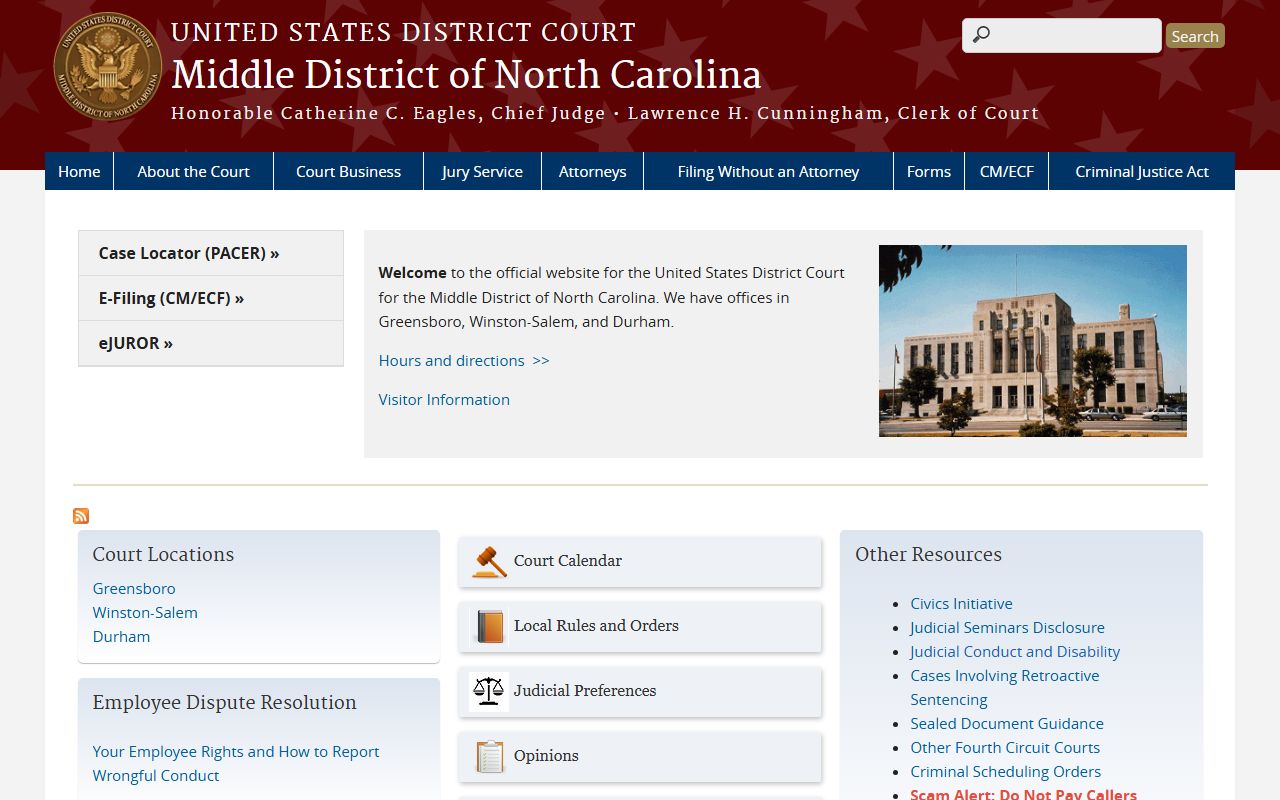
This federal district court source should not be confused with Randolph County Superior Court, which is part of the North Carolina Judicial Branch.
The Middle District court locations page identifies federal courthouse locations and clerk contact information.
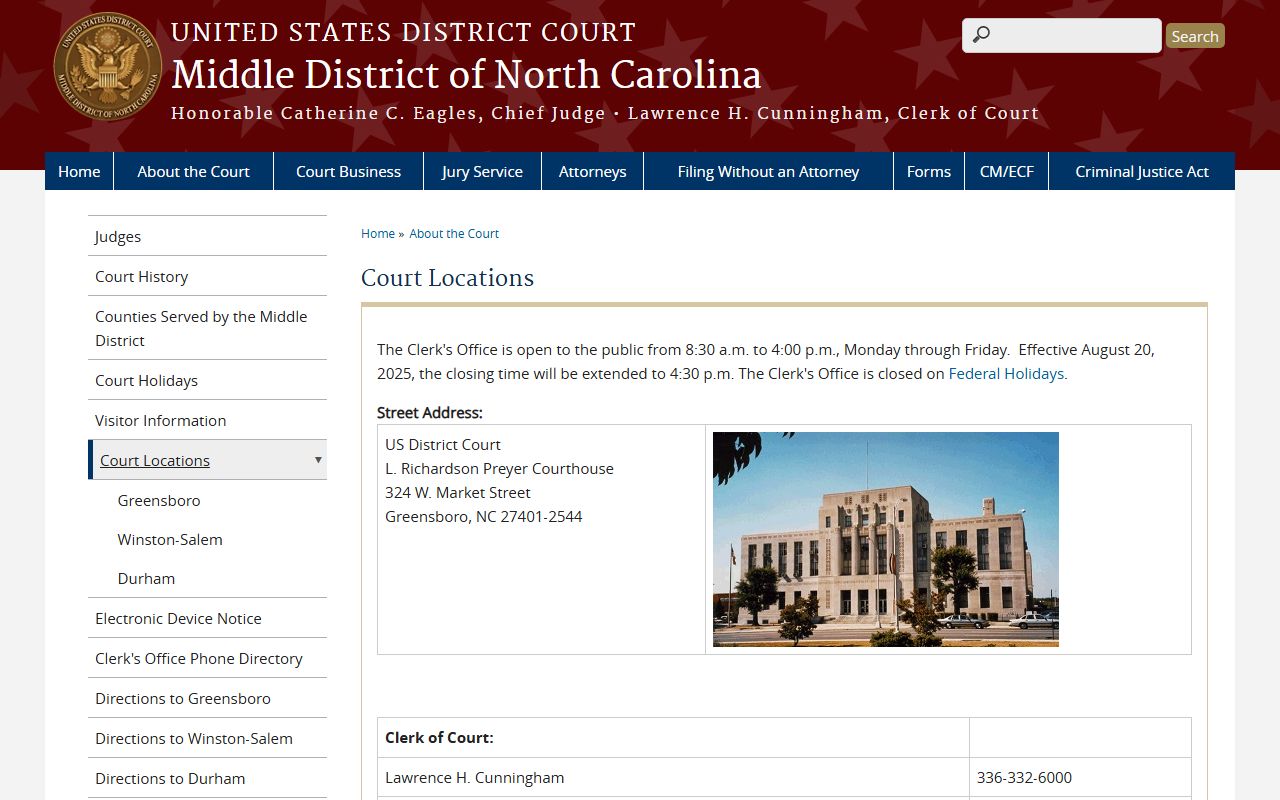
Use federal location information for federal filings, while Randolph County courthouse contacts handle state Superior Court, District Court, and magistrate matters.
The PACER CM/ECF lookup for the North Carolina Middle District identifies the federal electronic filing court.
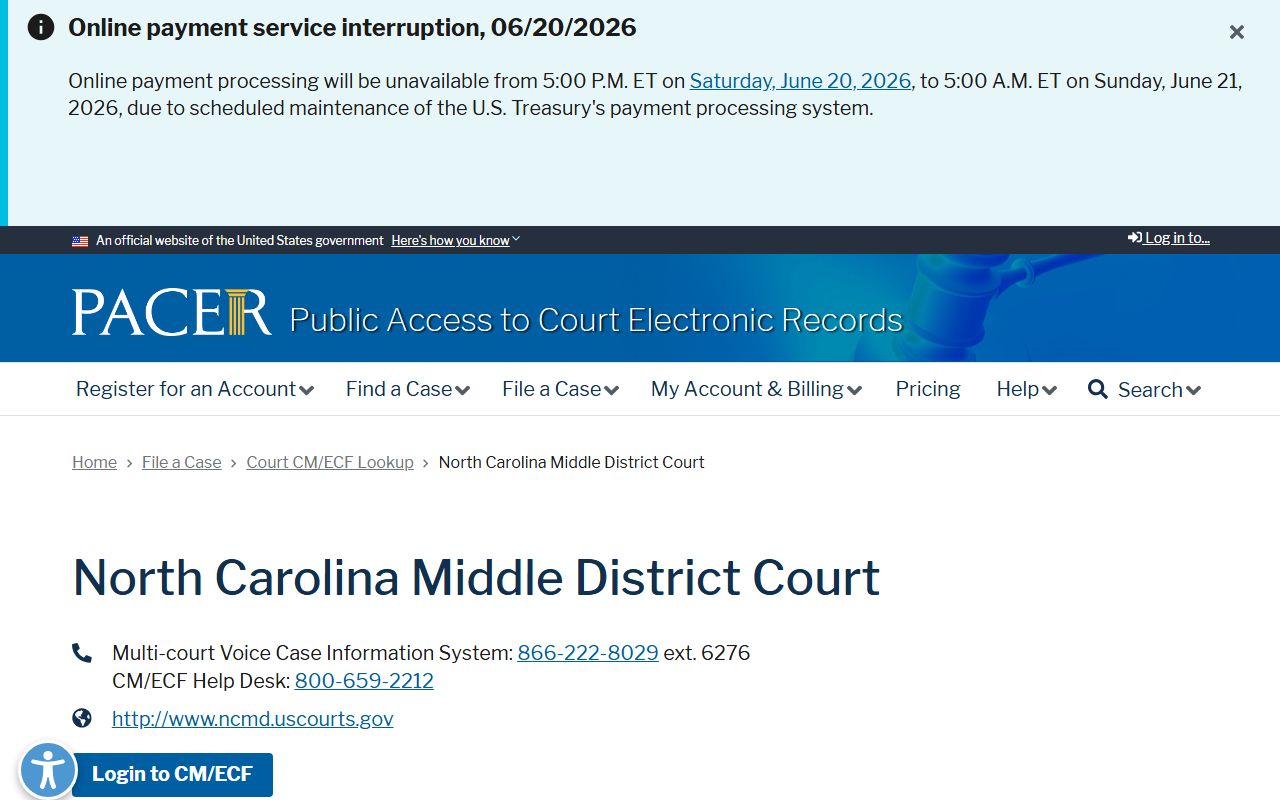
PACER is for federal case access and does not replace NC eCourts Portal for Randolph County Superior Court records.
The CM/ECF login for the U.S. District Court for the Middle District of North Carolina is another federal filing source.
State court users should not try to file Randolph County Superior Court pleadings through the federal CM/ECF login.
The U.S. Bankruptcy Court for the Middle District of North Carolina is also federal and separate from county trial-court records.
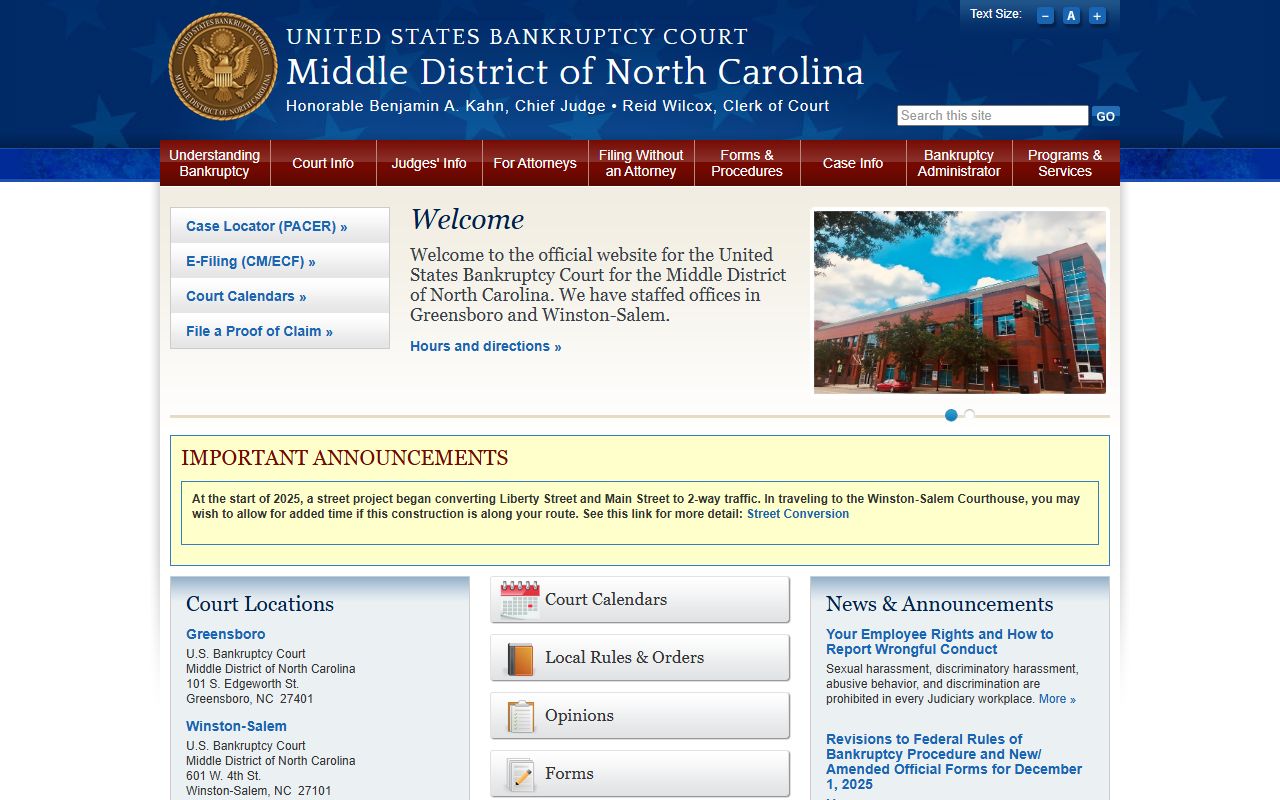
Bankruptcy records are federal records, while Randolph County Superior Court records are state trial-court records held through the North Carolina court system.
Note: The assigned U.S. Marshals image failed in the manifest and was not replaced.